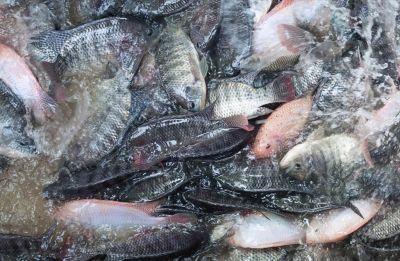


Vietnamese Tilapia Expands into New Markets and Higher-Value Segments
Vietnam’s tilapia exports continued to grow strongly in the first eight months of 2026, reaching US$90 million, up 43% year on year. However, the market landscape is becoming increasingly diverse, with strong growth in Brazil alongside emerging opportunities in Japan and other international markets.
August exports totaled approximately US$11 million, down 8% compared with the same month last year, highlighting the uneven performance across destinations. While Brazil remains the largest market, growing demand in Japan and several other regions is creating opportunities for Vietnamese tilapia to move beyond traditional mainstream segments.
Brazil Remains the Largest Market
Brazil continued to be the dominant destination for Vietnamese tilapia.
During the first eight months of 2026, Vietnam exported approximately US$44 million worth of tilapia to Brazil, representing nearly half of total Vietnamese tilapia export value. The figure increased sharply from a relatively low base in the same period of 2025.
The rapid expansion demonstrates strong market potential, particularly for frozen tilapia products. However, the high concentration also highlights the importance of market diversification.
In June 2026, industry representatives raised concerns over a Brazilian legislative proposal that could restrict imports of tilapia and tilapia products. VASEP subsequently called for coordination with relevant Vietnamese authorities to address the potential market-access risk.
For exporters, maintaining access to Brazil while developing alternative destinations will therefore remain an important part of the sector's strategy.
The U.S. Market Remains Under Pressure
The United States has presented a more challenging environment for Vietnamese tilapia exporters.
Exports to the U.S. totaled approximately US$21 million in the first eight months of 2026, down 48% year on year. August exports were around US$2 million, representing a 72% decline.
Slower purchasing activity and relatively high inventories have made U.S. importers more cautious about new orders. This has contributed to weaker export performance and highlights the importance of adapting product offerings and market strategies to changing demand conditions.
Japan Opens Opportunities for Higher-Value Tilapia
Japan is emerging as one of the more promising destinations for Vietnamese tilapia.
Vietnamese tilapia exports to Japan reached approximately US$2 million in the first eight months of 2026, up 77% year on year. In August alone, exports reached US$400,000, increasing 192% from the same period in 2025.
More importantly, Vietnamese brackish-water tilapia has begun entering the sushi and sashimi segment in Japan.
This development represents a shift from competing mainly in conventional whitefish and affordable-protein segments toward higher-value applications that require more stringent control over farming conditions, water quality, processing, food safety, and traceability.
The development of brackish-water tilapia is also attracting attention as Vietnam seeks to differentiate its products from large global tilapia suppliers.
Middle East and CPTPP Markets Continue to Expand
Beyond Brazil, the United States, and Japan, Vietnamese tilapia is gradually expanding into additional markets.
Exports to Saudi Arabia reached approximately US$7 million in the first eight months of 2026, up 23% year on year. The broader Middle Eastern market is becoming an increasingly relevant destination for Vietnamese tilapia products.
Exports to CPTPP markets reached US$6 million, up 50%, with Japan and Mexico contributing significantly to the growth.
Meanwhile, exports to the European Union reached approximately US$4 million, up 7%. Belgium was among the markets supporting the region's growth.
These developments suggest that Vietnamese tilapia is gradually building a broader international market base.
Tilapia Can Benefit from Whitefish Supply Gaps
The expansion of Vietnamese tilapia also comes at a time when some international markets are facing tighter supplies and higher prices for certain wild-caught whitefish.
Farmed tilapia offers several characteristics that can appeal to seafood buyers, including stable production, consistent supply, and flexibility in processed formats.
For European buyers in particular, tilapia could become an alternative raw material for selected applications when suppliers can meet requirements related to product specifications, quality, food safety, certification, and traceability.
The opportunity, however, is not simply about replacing one species with another. Vietnamese exporters will need to demonstrate consistent quality and reliable supply while offering product formats that match specific buyer requirements.
Quality and Traceability Will Define the Next Stage
The first eight months of 2026 show that Vietnamese tilapia has significant export potential, but the sector is entering a more competitive stage.
Strong dependence on Brazil creates concentration risk, while the decline in the U.S. market demonstrates how quickly market conditions can change. At the same time, Japan's growing interest in higher-value applications provides an opportunity to improve the overall value proposition of Vietnamese tilapia.
The next stage of development will therefore depend on several factors:
-
Consistent product quality from farming to processing
-
Reliable and traceable farming practices
-
Compliance with international food-safety requirements
-
Development of value-added products
-
Expansion into diversified export markets
-
Greater use of brackish-water farming where appropriate
-
Stronger supply-chain cooperation between farmers, processors, and exporters
Vietnam's tilapia industry is moving beyond simple volume growth. By combining reliable supply with quality, traceability, and market-specific product development, Vietnamese tilapia can continue expanding its presence across both mainstream and higher-value seafood segments.