
Vietnamese Pangasius Gains Ground in Europe's Whitefish Market
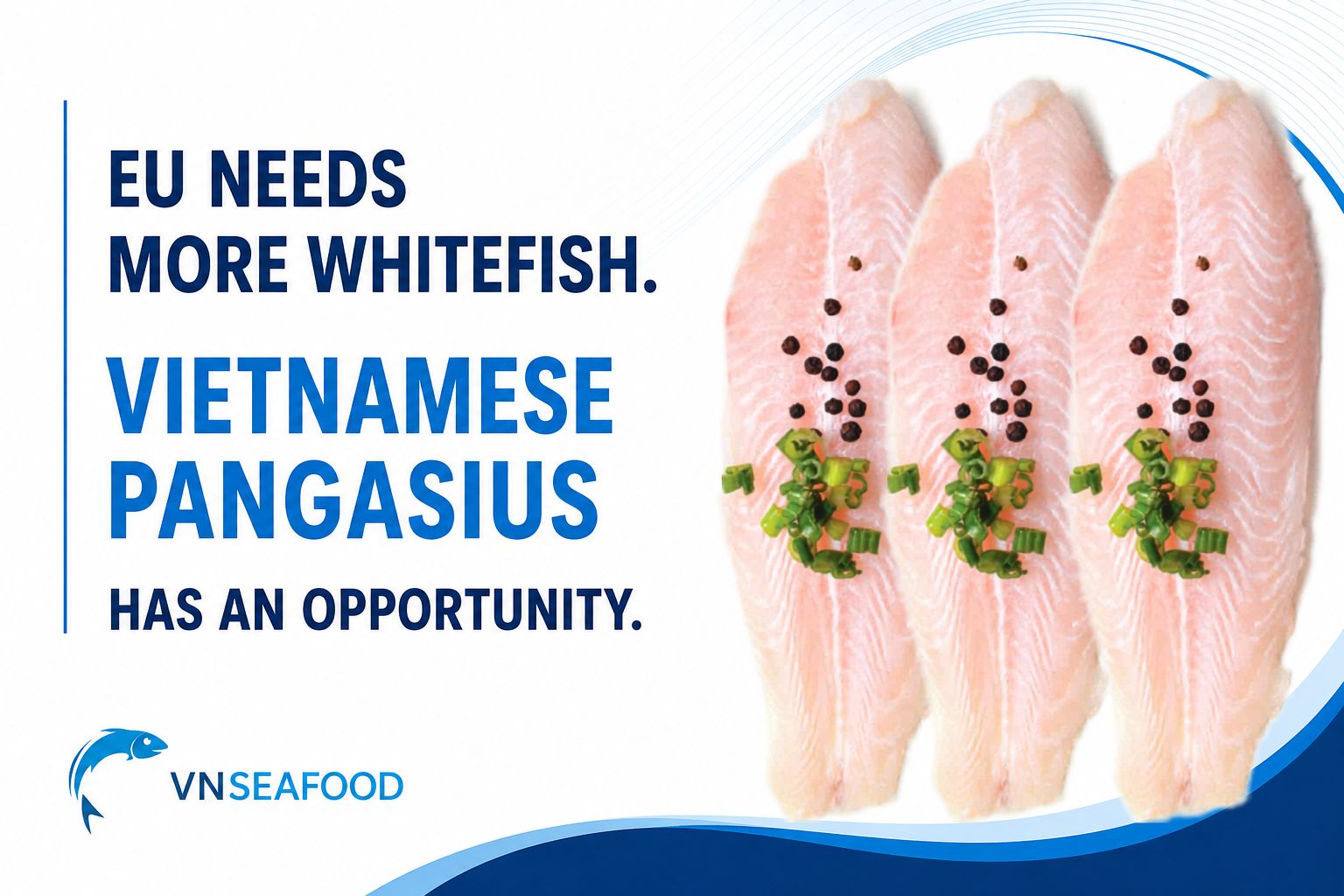
Vietnamese pangasius is gaining new opportunities in the European Union as tighter supplies of traditional whitefish species create greater demand for affordable and reliable alternatives. The trend is providing additional room for Vietnamese suppliers to strengthen their position in the EU seafood market.
During the first half of 2026, Vietnam's pangasius exports to the EU reached approximately US$91 million, representing a 3% increase compared with the same period in 2025. Export value in June alone reached around US$20 million, up 56% year on year, indicating stronger purchasing activity toward the end of the second quarter.
Tightening Whitefish Supply Creates New Opportunities
The European whitefish market is facing tighter availability of several traditional species. Global cod trade weakened in 2025 as supplies declined and prices increased, while cod and Alaska pollock quotas were also reduced for 2026. These supply constraints are expected to keep prices elevated and encourage buyers to consider alternative whitefish species.
This environment is favorable for pangasius, particularly because of its competitive pricing, stable aquaculture-based supply, and versatility across retail and foodservice applications.
The Food and Agriculture Organization (FAO) has also identified pangasius as an increasingly viable alternative to higher-priced whitefish species, particularly in the European Union, where imports have shown steady growth.
Frozen Fillets Continue to Dominate Vietnamese Pangasius Exports
Frozen pangasius fillets remain the core product category in Vietnam's exports to the EU.
The product structure indicates that the European market continues to rely heavily on conventional frozen fillets, while value-added and convenience-oriented products account for a much smaller share. This creates an opportunity for exporters to diversify beyond standard fillets and develop products better suited to modern retail and foodservice requirements.
Potential growth areas include:
- Portion-controlled fillets
- Skinless and boneless products
- Ready-to-cook formats
- Marinated or seasoned fillets
- Consumer-ready packaging
- Value-added pangasius products
Vietnam's overall pangasius export structure also remains highly concentrated in frozen products. In the first half of 2026, frozen pangasius fillets generated approximately US$919 million in export value globally, up 15% year on year.
Price and Supply Stability Strengthen Pangasius' Position
One of pangasius' key advantages in the European market is its ability to provide a relatively predictable supply compared with wild-caught whitefish.
As cod and pollock face tighter supply conditions, European buyers are increasingly required to balance product availability, pricing, and consistency. Pangasius can address these requirements through large-scale aquaculture production and established processing capabilities in Vietnam.
Global pangasius production is expected to exceed 4 million tonnes in 2026, with Vietnam continuing to play a leading role in global supply. FAO also highlights affordability and product versatility as important factors supporting the species' expanding market presence.
Product Diversification Could Unlock Further EU Growth
Although the current export structure is still dominated by frozen fillets, changing European consumer preferences create opportunities for suppliers to move toward more convenient formats.
European seafood consumption is increasingly influenced by convenience, affordability, and reliable supply. Retailers and foodservice operators therefore have greater interest in products that reduce preparation time while maintaining consistent quality.
For Vietnamese pangasius suppliers, this could mean moving beyond commodity-style products and offering specifications tailored to different applications and customer segments.
Key areas for development include:
- Retail-ready packaging
- Smaller portion sizes
- Consistent sizing and glazing specifications
- Ready-to-cook products
- Value-added processing
- Sustainable and traceable supply chains
This approach can help Vietnamese pangasius compete not only on price, but also on convenience, consistency, and supply reliability.
Outlook for Vietnamese Pangasius in the EU
The EU remains a relatively stable market for Vietnamese pangasius, although growth during the first half of 2026 was moderate compared with several other major markets. The combination of tightening whitefish supplies and continued demand for affordable seafood nevertheless provides a favorable environment for further market development.
The opportunity is particularly relevant as European buyers seek alternatives that can offer competitive pricing without compromising product consistency or supply security.
For exporters, the next stage of growth may therefore depend less on simply increasing shipment volumes and more on matching pangasius products with specific European retail, foodservice, and processing requirements.
Conclusion
Vietnamese pangasius is benefiting from changing conditions in the European whitefish market. Tightening supplies and higher prices for traditional species such as cod and pollock are encouraging buyers to consider competitive alternatives, while pangasius offers the advantages of affordability, stable supply, and processing flexibility.
As demand patterns continue to evolve, Vietnamese suppliers that combine reliable quality with convenient product formats, traceability, and flexible specifications will be better positioned to capture new opportunities in the EU seafood market.