

Following the military conflict involving the United States, Israel, and Iran, the Middle East has rapidly lost its role as a key aviation and maritime transit hub. This development not only affects regional consumer markets but also directly disrupts the global seafood logistics system. Fresh fish products are among the first to be impacted, and supply chain disruptions have already begun spreading to Asian markets.
The logistics sector has been particularly affected. According to Flexport CEO Ryan Petersen, nearly 18% of global air cargo capacity “disappeared overnight.” Data from Flightradar24 shows that only 81 flights operated over the Persian Gulf on Saturday (Feb 28) compared with the normal level of around 19,000 flights per day. Emirates SkyCargo has suspended all flights, Qatar Airways Cargo halted operations, and FedEx temporarily stopped services in six Gulf countries and Israel.
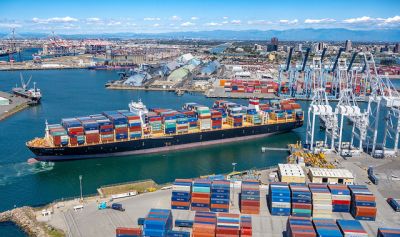
Maritime transport has also been disrupted. Iran’s Revolutionary Guard warned that vessels are not permitted to pass through the Strait of Hormuz. As of March 1, at least 200 ships were reportedly congested in the area. Jebel Ali Port in Dubai temporarily suspended operations due to fires caused by falling debris. Major shipping lines have adjusted their strategies: MSC has stopped accepting bookings to the Middle East; Maersk suspended its Red Sea route and rerouted vessels via the Cape of Good Hope; CMA CGM instructed ships in the Gulf to “shelter in place” and imposed a USD 2,000–4,000 per container surcharge; while Hapag-Lloyd applied a USD 1,500 war risk surcharge. Several insurance companies have also announced the cancellation of war risk coverage in the Gulf starting March 5.
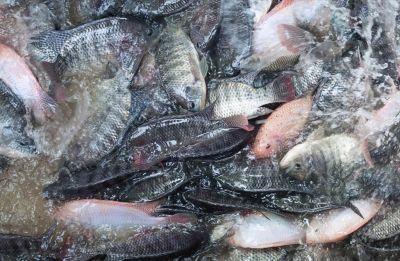
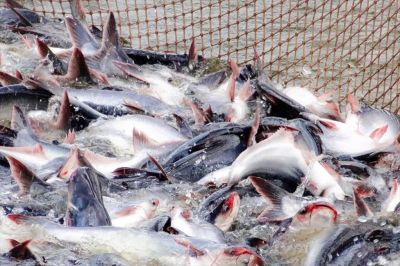
Fresh fish trade has become one of the most sensitive sectors. The Gulf region is a major import market for high-value Atlantic salmon. Whole fish, head-gutted fish, and fillets from Norway and Scotland are typically transshipped through Dubai and Doha, with some volumes re-exported to China and East Asia. As these two major air hubs become paralyzed, wholesale salmon prices in China have begun showing signs of increase.
Trade data highlights the growing importance of the region. Salmon imports into the UAE have more than tripled since 2012, reaching about 10,830 tons in 2025. Saudi Arabia’s imports increased from 590 tons to more than 10,350 tons, while Israel imported USD 287 million worth of salmon in 2024.
Analysis by the Bourse & Bazaar Foundation indicates that under current disruption levels, UAE fresh fish inventories may only last about five days, placing them in the “severe risk” category. Frozen fish stocks could last 40–50 days, while canned fish may last around 90 days. Due to the heavy reliance on air transport, fresh fish supply chains are depleted very quickly when disruptions occur.
European exporters are now forced to redirect shipments and seek alternative markets for consignments originally destined for the Gulf region, potentially putting pressure on spot prices in Europe. Logistics company DSV noted that even if airspace reopens, clearing the backlog could take several weeks.
Analysts believe the conflict will not only cause short-term disruptions but may also increase long-term instability for transport routes and global trade. The Middle East’s dual role as both a major consumption market and a logistics hub is weakening, creating significant short-term pressure on the global fresh fish trade.